https://www.dailymaverick.co.za/opinionista/2020-03-17-covid-19-planet-earth-fights-back/
Opinionista • Swati Thiyagarajan • 17 March 2020
Covid-19: Planet Earth fights back
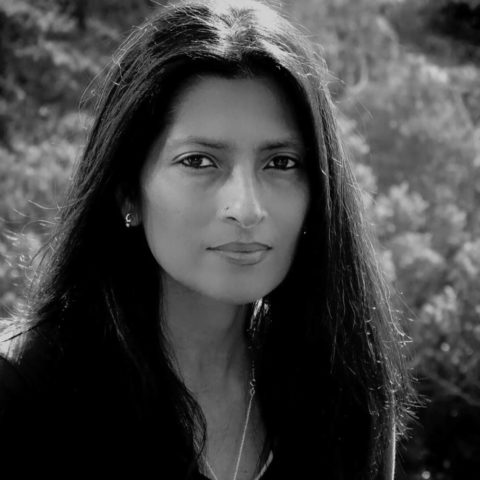
Swati Thiyagarajan
Swati Thiyagarajan is an environment journalist, works at Sea Change Project and is consulting environment editor at New Delhi TV, NDTV.
The flip side to Covid-19 is first the understanding that we are not invincible and are just another species on this planet. That the world is round and a crisis in one place can become a crisis in every place. That we are only as strong as our most vulnerable people, and systems put in place to ruthlessly maximise profit while minimising humanity will always lead to disaster.
Patient zero has been around for a while. She is breathless, severely dehydrated, her lungs are compromised, her immunity is compromised, she has a raging high fever with occasional chills. She is 4.5 billion years old and she lived in relative health for 99% of that time. Then this really ghastly virus called the agricultural, and then the industrialised human came along, and she’s been sick pretty ever since.
She, unlike us, self-heals. Over her very long life, she has created life, destroyed it and changed it in order to do only one thing – survive. Her self-healing now, has shut us down. All our arrogance of technological advancement, hyper-capitalism, space travel – and we may as well be hunter-gatherers living in a cave facing down a pride of hungry lions with no weapons, in the face of Covid-19.
A zoonotic disease, it’s not the first and certainly will not be the last. From rabies, to anthrax, to HIV/AIDS, the bubonic plague, the various coronaviruses like Sars, Mers and so on, all zoonotic and all due to our relentless exploitation of the planet and her resources.
While it is not yet clear exactly from which animal this Covid-19 virus originated, it is absolutely fact that it is from a wild animal, poached and trapped against its will, kept and consumed in unhygienic conditions. The original virus could have started in a bat and perhaps came to us through the pangolin, the most trafficked animal on earth. The illegal wildlife trade is worth multiple billions of dollars and scant attention and resources have been allocated to fight it. Poaching has pushed tens of thousands of species to the brink while sanctioned legal development is pushing habitats to the brink. This dangerous combination of both habitat and species loss is exacerbating climate change which in turn is causing damage to our ability to survive as a species.
Biodiversity, or the variety of species in a living ecosystem, is the immune system of the planet. Take the human body. Our bodies have more bacteria than human cells. These microorganisms help keep us alive and healthy. For the human body, the gut or the stomach plus intestines are the most crucial part of our immune system. The greater the biodiversity – or different types of good bacteria in our guts – the better our health and immune response. If an external agent attacks, it’s the immune system that fights it off. Similarly, for planet Earth, it’s her biodiversity that is the immune system. When we, with our exploitative activities, cause issues like climate change, she can cope if her biodiversity stays intact. But we are riddling her precious immune system with holes which adds to the growing ravages of climate change.
This collapse is also forcing people and the wild into closer proximity and forcing poor communities who are hit hardest to turn to poaching and bushmeat and wet markets to supplement their food requirements. It’s easy to point fingers at poor African communities over AIDS and Ebola, and at the Chinese over wet markets and illegal wildlife trade, but unless we acknowledge we are all culpable in this mess, we are in big trouble.
This virus has already forced social isolation on us. We are unable to hug our parents, kiss our grandparents, hold our children. Basic everyday needs that keep us human, that keep us together as a community. There are people dying without being held by their loved ones at the very end. If there are real scars leftover from Covid-19, it would be this. That someone we loved died without a last loving human touch from the person who mattered the most to them.
Biodiversity also is a system of checks and balances. If there are certain species that are prey, there are certain that are predators. If there are species that are parasites, there are also species that feed on them. As biodiversity dwindles, these checks and balances go haywire. Let’s say there’s a herd of deer in the wild. Several predators keep the deer from multiplying too fast and devouring the habitat. The deer also stay alert, fast, fit because of all the running and alertness required to evade the predators. The predators also target the weak, the slow, the sick, keeping the deer population healthy. Without them, the deer will grow in number, out-eat their survivability and get sick.
Sounds familiar? What we do when we get hold of animals is crowd them up, keep them in unhygienic conditions, feed them the wrong foods and sometimes artificially keep them healthy with antibiotics. This has led to a cascade of diseases in humans, adds to making us antibiotic-resistant and then throws up a deadly zoonotic which brings us to our knees.
As omnivores, we pretty much eat anything. While zoonotic diseases come from eating meat raised or housed in unhygienic conditions, it’s not meat per se that’s the problem. It’s factory-farmed meat and illegal wild meat. Both plant-based agriculture and meat farms in the industrialised age cause extensive habitat damage leading to biodiversity loss.
The flip side to Covid-19 is firstly the understanding that we are not invincible and are just another species on this planet. That the world is round and a crisis in one place can become a crisis in every place. That we are only as strong as our most vulnerable people, and systems put in place to ruthlessly maximise profit while minimising humanity will always lead to disaster. Meanwhile, between social distancing, lack of travel and drop in manufacturing and consumption, emissions have dropped, China has seen a blue sky after years, serious concerns are being raised around the wildlife trade and patient zero is feeling better.
If we choose to live on this planet like a breeding prey species that devours like a predator while functioning like a parasite, we will force our host to react more virulently. Hers is an ancient biological intelligence that has powered life for four billion years, It’s honed, it’s extensive and it is a cold intelligence that will do what it takes to survive. As we race to find a vaccine to help us survive viruses, so is she, patient zero, looking for solutions.
If we choose to find the best parts of ourselves, where in lockdown an Italian neighbourhood sang to one another, where young people are going door to door asking older people if they need help in running errands, where the Chinese flew out a whole plane full of experts and helpers and ventilators to Italy, where we learn to live with greater compassion for each other and the living planet, we can hope to cope with and perhaps even thrive in the coming decades.
As the Chinese wrote on their help package, “we are all waves in the same ocean”. DM


